Sustainable Agriculture for Better Nutrition
Explore the vital role of agriculture in food production, human health, and environmental quality. Learn how sustainable practices can meet the growing demand for nutritional foods while ensuring agricultural productivity.
FOOD AND NUTRITION
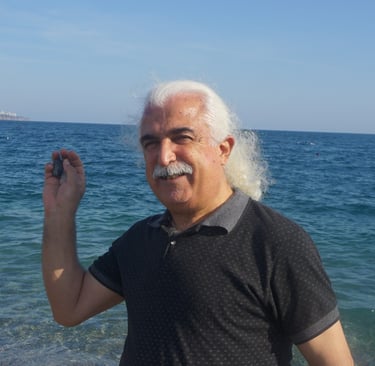
Mithat Direk
10/2/2026


Agriculture is far more than an economic activity. It is the foundation of human survival, the source of the food that sustains life, and, when understood in its broader context, a powerful contributor to public health, environmental quality, and social well-being. From the earliest human communities to the present day, agriculture has continuously fulfilled one of its most essential functions: feeding society. Today, however, that role is expanding. As populations grow, lifestyles change, and societies face new health and environmental challenges, the connection between agriculture and human well-being has become more visible and more important than ever. What happens on farms ultimately influences what appears on our plates, how nutritious our diets are, and how resilient our communities can become.

The first and most important function of agriculture is to produce the food that sustains human life. If fisheries are considered part of agricultural activities, while efforts by non-agricultural sectors to produce food are set aside, agriculture remains the primary sector responsible for producing food for human consumption. Crops, livestock, fisheries, and other agricultural activities provide calories, proteins, vitamins, minerals, and other nutrients necessary for healthy lives.
This makes agriculture's contribution to public health unmistakable. Inadequate, unsafe, or unbalanced nutrition can weaken immunity, increase vulnerability to disease, impair physical and cognitive development, and reduce productivity. Children are particularly affected when nutritious food is unavailable during critical stages of growth. At the same time, excessive consumption of highly processed and nutritionally poor foods can contribute to rising rates of diet-related diseases.
Agriculture therefore has a responsibility that extends beyond producing greater quantities of food. It must increasingly support the production of safe, diverse, nutritious, and affordable food while protecting the natural resources on which future production depends. Healthy soils, clean water, biodiversity, responsible livestock management, and sustainable farming practices all contribute indirectly to healthier populations. A society that cannot feed its people well cannot thrive, making sustainable and nutrition-sensitive agriculture an essential investment in both human health and long-term development.
Changing Diets and Türkiye’s Growing Demand for Animal Protein
A study conducted in Türkiye at ten-year intervals reveals important changes in the country's eating habits and food preferences. Consumption of wheat products, potatoes, pulses, milk, yogurt, eggs, poultry, fish, and margarine has increased significantly over time. At the same time, consumption of red meat and fresh vegetables has changed relatively little, while bread consumption has declined. These changes reflect broader economic and social transformations, including rising incomes, urbanization, changing lifestyles, and greater access to diverse food products.
The overall pattern suggests that the Turkish diet is gradually moving away from a predominantly starch-based pattern toward one with a greater contribution from protein-rich foods. Such dietary transitions are common as countries develop economically. As household incomes increase, consumers generally seek greater variety and may devote a larger share of their food budgets to animal-source foods, fruits, vegetables, and processed or convenience products.
Although animal protein consumption in Türkiye has increased considerably compared with earlier periods, a gap remains when compared with many developed countries. In recent years, annual per capita poultry consumption has exceeded 20 kg, while increasing consumption of red meat and seafood has contributed to total meat consumption of roughly 45–50 kg per person annually. In many OECD countries, annual per capita meat consumption is considerably higher, often ranging between 70 and 100 kg. However, healthy nutrition cannot be measured simply by the amount of meat consumed. Protein quality, dietary diversity, affordability, and balanced consumption of plant- and animal-based foods are equally important.
Türkiye's daily per capita protein intake is generally adequate, but a significant share comes from cereals and other plant-based foods. Complementary sources of plant and animal protein can help provide a more balanced diet, particularly for children, young people, older adults, and people with specific nutritional requirements. For this reason, sustainably strengthening the production of milk, eggs, poultry, red meat, and aquatic products can contribute to nutritional security. Achieving this goal will require improved animal breeds, better pasture management, prevention of overgrazing, rehabilitation of rangelands, greater production of quality forage crops, and expansion of efficient feed-processing capacity. These measures can help Türkiye improve animal productivity while supporting nutrition, rural livelihoods, and the long-term sustainability of its livestock sector.
Rethinking Agricultural Policy for Health, Environment, and Sustainable Development
When setting agricultural policy objectives, Türkiye must consider its level of economic development, available natural resources, and the capacity of its agricultural sector to produce the foods required for healthy and balanced diets. The challenge is not simply how to feed a growing population, but how to respond to increasingly diverse and changing food consumption patterns while protecting the resources needed for future production. As dietary expectations evolve and pressures on land, water, and the environment increase, the importance of agriculture to national well-being will become even greater.
Agriculture should also be understood in a broader sense, extending beyond the production of crops and livestock to include forests, pastures, wetlands, and other green spaces that form an essential part of rural and natural landscapes. From this perspective, agriculture and related land-based activities contribute not only to food and industrial raw materials but also important environmental and health benefits.
These benefits are particularly significant in rapidly growing cities. Industrial concentration, household heating, vehicle emissions, and industrial waste can contribute to deteriorating air quality. At the same time, traffic congestion, urban noise, long commuting times, and the pressures of densely populated environments can increase fatigue and psychological stress. Continuous exposure to such conditions may affect people's quality of life, productivity, and social and family relationships. Access to clean, attractive, and accessible green spaces can provide an important counterbalance to these pressures.
Green areas that contribute to recreation, relaxation, and psychological well-being should therefore be protected rather than treated as land reserves for unrestricted development. As populations increase, lakes, rivers, coastal areas, forests, and other natural environments face growing pressures from pollution and land conversion. Protecting human well-being requires not only preventing further degradation but also restoring damaged ecosystems and expanding opportunities for people to connect with nature.
The sustainable development concept associated with the United Nations' World Commission on Environment and Development emphasizes meeting present needs without compromising the ability of future generations to meet their own needs. For Türkiye, this principle requires policies that promote economic development while reducing pollution and protecting forests, vegetation, air, water, and other natural resources.
Forests deserve particular attention. Approximately one-quarter of Türkiye's territory is forested, although only a portion of these forests is considered to be in good condition. Forests and urban green spaces support cleaner air, biodiversity, recreation, and psychological well-being. Consequently, forest conservation, green-space management, and sound urban planning should be treated as interconnected components of a broader strategy for healthier communities and sustainable development.
Conclusion
Agriculture is fundamental not only to food production but also to human health, environmental quality, and long-term social well-being. As dietary patterns change in Türkiye, agricultural policy must respond to growing demand for diverse and nutritious foods while ensuring that production remains environmentally sustainable. Improving livestock productivity, strengthening forage and pasture systems, and promoting balanced sources of protein can contribute to better nutrition and stronger rural livelihoods. At the same time, agriculture must be viewed beyond farms and food production. Forests, pastures, wetlands, rivers, and urban green spaces provide essential ecosystem services that support physical and psychological health. Sustainable development therefore requires policies that connect food security, nutrition, environmental protection, and urban planning. Protecting natural resources today is an investment in the health and well-being of future generations. A healthier society ultimately depends on a healthier agricultural sector and a healthier environment.
Please note that the views expressed in this article are of the author and do not necessarily reflect the views or policies of any organization.
The writer is affiliated with the Department of Agricultural Economics, Selcuk University, Konya-Türkiye and can be reached at mdirek@selcuk.edu.tr








Related Stories
📬 Stay Connected
Subscribe to our newsletter to receive research updates, publication calls, and ambassador spotlights directly in your inbox.
🔒 We respect your privacy.
🧭 About Us
The Agricultural Economist is your weekly guide to the latest trends, research, and insights in food systems, climate resilience, rural transformation, and agri-policy.
🖋 Published by The AgEcon Frontiers (sPvt) Ltd. (TAEF) a knowledge-driven platform dedicated to advancing research, policy, and innovation in agricultural economics, food systems, environmental sustainability, and rural transformation. We connect scholars, practitioners, and policymakers to foster inclusive, evidence-based solutions for a resilient future.
The Agricultural Economist © 2024
All rights of 'The Agricultural Economist' are reserved with TAEF