
Unlocking Sweet Corn's Potential in Pakistan
Explore the untapped opportunity of sweet corn in Pakistan's agricultural landscape. Despite strong maize production, sweet corn faces challenges due to structural gaps in seed systems, extension services, post-harvest infrastructure, and market integrations.
RURAL INNOVATION
Hajan Ambreen, Umara Sahar Rana & Muhammad Kashif
2/10/2026
In Pakistan, sweet corn (Zea mays L. saccharata) remains a niche crop, largely confined to health-conscious urban consumers, supermarkets, and the hospitality industry. Its limited footprint is striking given Pakistan’s long history with maize cultivation and the availability of agro-climatic conditions that are well suited to sweet corn production. This paradox raises important questions about the underlying constraints to wider adoption. Is the marginal status of sweet corn primarily driven by consumer taste and entrenched food preferences, or does it reflect deeper shortcomings in varietal development, extension services, post-harvest handling, and market integration?
Pakistan is a major maize-producing country, with production overwhelmingly oriented toward grain and feed uses for poultry and livestock. According to the Pakistan Bureau of Statistics, maize cultivation covered approximately 1.74 million hectares during 2022–23, yielding about 10.99 million tons of output (PBS, 2023). Despite this scale, sweet corn accounts for a negligible share of total maize production and is not reported separately in national agricultural statistics. This absence from official data itself signals the crop’s peripheral status in policy, research, and investment priorities.
International comparisons underscore the missed opportunity. In countries such as the United States, Canada, and Hungary, sweet corn is a mainstream vegetable crop, supported by well-developed seed systems, contract farming, cold chains, and processing industries producing frozen and canned products for both domestic and export markets (FAOSTAT, 2023). Within Asia, Thailand and China have successfully integrated sweet corn into agro-processing and export-oriented value chains. By contrast, in Pakistan, like India and Bangladesh, sweet corn remains largely experimental, cultivated on small plots with weak market linkages. This suggests that the constraint is less agronomic feasibility and more the absence of coordinated value chain development, consumer awareness, and supportive institutional frameworks.
Agronomic Specificities and Structural Market Constraints
Botanically, sweet corn originates from a natural recessive mutation, most associated with the sugary1 (su1) gene, that limits the conversion of sugars into starch within the endosperm. This genetic characteristic produces kernels with elevated sugar content, softer texture, and a distinctly sweet flavor profile that differentiates it from conventional field maize (Revilla et al., 2021). Although both crops belong to the same species, their agronomic management, harvest timing, and post-harvest handling requirements diverge significantly. Sweet corn must be harvested at the milk stage and rapidly cooled to preserve sweetness and quality, making it far more sensitive to delays and infrastructure gaps. In Pakistan, the absence of a specialized value chain including structured procurement systems, processing facilities, and targeted policy incentives renders sweet corn cultivation a comparatively high-risk enterprise for farmers. Limited cold storage capacity and inadequate rural logistics amplify post-harvest losses, discouraging even commercially oriented producers from diversifying into this crop (Rana et al., 2022).
The agronomic challenges are closely intertwined with supply chain deficiencies. Sweet corn requires precise sowing windows aligned with optimal temperature ranges, yet many farmers apply traditional field corn calendars, leading to suboptimal yields and inconsistent kernel sweetness. Empirical trials in agro-ecological zones such as Multan, Peshawar, and Nowshera have demonstrated that planting dates directly influence cob development, pest resistance, and marketable quality, with even minor deviations reducing profitability (Khan et al., 2021). Furthermore, the genetic base of sweet corn in Pakistan remains narrow, heavily dependent on costly imported hybrid seeds. Limited domestic research and development restrict the availability of climate-resilient and region-specific cultivars suited to local production conditions (Iqbal et al., 2020). On the market side, weak cold-chain infrastructure leads to rapid quality deterioration after harvest. As a result, sweet corn is primarily marketed as a seasonal premium product in major urban centers like Lahore and Karachi, creating a persistent disconnect between rural production potential and consistent consumer demand. This highlights that, unlike traditional subsidized crops, the success of sweet corn hinges not merely on financial incentives but on the development of an integrated and responsive market ecosystem (Agricultural Policy Institute, 2022).
A Strategic Pathway for Integrating Sweet Corn into Pakistan’s Agri-Food System
Unlocking the commercial potential of sweet corn in Pakistan requires a coordinated, multi-stakeholder strategy that aligns production, research, infrastructure, and market development. Global experience demonstrates that successful sweet corn industries rarely emerge spontaneously; instead, they are deliberately built through public–private partnerships that link seed innovation, farmer capacity building, and downstream processing and marketing (Tracy, 2021). Countries that have transformed sweet corn into a mainstream vegetable crop have invested simultaneously in genetics, logistics, and demand creation, ensuring that risks and returns are more evenly distributed along the value chain.
A logical starting point for Pakistan is varietal development. Collaboration with international research institutions such as CIMMYT, alongside domestic seed companies, can accelerate the breeding of high-yielding, disease-resistant sweet corn hybrids tailored to major agro-ecological zones. Locally adapted varieties would reduce dependence on expensive imported seed and improve yield stability under heat and water stress conditions. Parallel to this, capacity building must be strengthened. Extension services need to move beyond generic maize recommendations and provide crop-specific guidance on optimal planting windows, irrigation scheduling, nutrient management, and harvest timing to preserve kernel sweetness and market quality.
Equally critical is investment in value-chain infrastructure. Establishing localized pre-cooling and cold storage facilities near production clusters, combined with contract farming arrangements linked to processors, supermarkets, and the food service industry, can reduce post-harvest losses and provide farmers with assured markets and predictable prices. Such arrangements lower production risk and encourage adoption by small and medium-scale growers. Finally, demand creation is essential for sustained growth. Consumer awareness campaigns emphasizing the nutritional value and culinary versatility of sweet corn, coupled with the development of processed products such as frozen kernels, vacuum-packed cobs, and ready-to-eat options, can expand domestic consumption beyond elite urban niches. Together, these measures can integrate sweet corn into Pakistan’s agri-food system as a viable, income-generating diversification crop.
Conclusion
Sweet corn represents a largely untapped opportunity within Pakistan’s agricultural landscape one that contrasts sharply with the country’s strong maize production base and favorable agro-climatic conditions. As this assessment shows, the marginal status of sweet corn is not rooted in agronomic infeasibility but in structural and institutional gaps that span seed systems, extension services, post-harvest infrastructure, and market integration. The absence of dedicated value chains, reliable cold storage, and assured procurement has positioned sweet corn as a high-risk crop, discouraging farmer adoption despite its strong income and diversification potential.
International experience demonstrates that sweet corn can evolve from a niche product into a mainstream vegetable when supported by coordinated public–private action. For Pakistan, progress hinges on shifting from isolated pilot efforts toward a systemic approach that simultaneously addresses varietal development, farmer capacity, logistics, and consumer demand. Developing locally adapted hybrids, strengthening crop-specific advisory services, and investing in pre-cooling, processing, and contract farming arrangements can significantly reduce production and marketing risks. Equally important is stimulating demand through awareness of sweet corn’s nutritional value and expanding processed product options that ensure year-round consumption.
If these elements are aligned, sweet corn can contribute to farm income diversification, rural employment, and dietary improvement, while reducing overreliance on traditional crops. The “golden grain” need not remain silent in Pakistan; with strategic vision and institutional commitment, it can rise as a viable component of a more resilient and market-responsive agri-food system.
References: FAOSTAT; Iqbal et al; Khan et al; Pakistan Bureau of Statistics; Rana et al; Revilla et al; Tracy.
Please note that the views expressed in this article are of the author and do not necessarily reflect the views or policies of any organization.
The writer is affiliated with the Department of Plant Breeding and Genetics, University of Agriculture, Faisalabad, Pakistan and can be reached at mkashifpbg@uaf.edu.pk
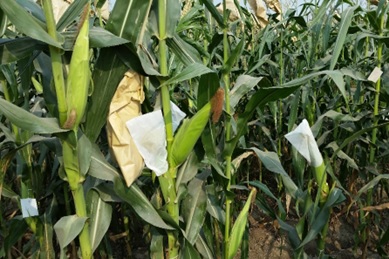
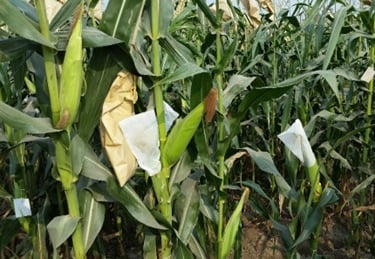
Figure: Corn breeding by maize research group in University of Agriculture Faisalabad (Photo by PicKash)




Related Stories
📬 Stay Connected
Subscribe to our newsletter to receive research updates, publication calls, and ambassador spotlights directly in your inbox.
🔒 We respect your privacy.
🧭 About Us
The Agricultural Economist is your weekly guide to the latest trends, research, and insights in food systems, climate resilience, rural transformation, and agri-policy.
🖋 Published by The AgEcon Frontiers (sPvt) Ltd. (TAEF) a knowledge-driven platform dedicated to advancing research, policy, and innovation in agricultural economics, food systems, environmental sustainability, and rural transformation. We connect scholars, practitioners, and policymakers to foster inclusive, evidence-based solutions for a resilient future.
The Agricultural Economist © 2024
All rights of 'The Agricultural Economist' are reserved with TAEF